

Sage 300 and Adobe Commerce (Magento) Integration & Automation
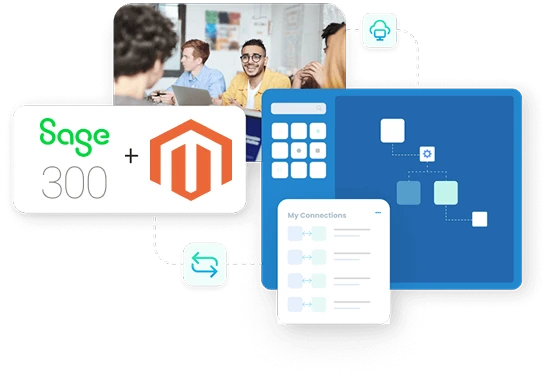
Sage 300 and Adobe Commerce (Magento) integration connects your online store with the ERP that runs stock, pricing, customers, and order processing, and APPSeCONNECT gives you a governed platform to move that data without custom scripts. Magento orders create Sage 300 sales orders, Sage 300 stock and price changes push out to the storefront, and customer and invoice details move through managed flows so both systems work from the same record.
KEY BENEFITS
Why APPSeCONNECT Is the Gold Standard for Sage 300 and Adobe Commerce (Magento) Integration
Sage 300 and Adobe Commerce (Magento) work together through controlled integration workflows. The integration keeps store activity tied to the ERP record, so sales, warehouse, and finance teams stop fixing the same customers, stock, and orders twice.
Post Web Orders With the Right Sage 300 Rules
Magento orders can become Sage 300 sales orders with customer match, item, tax, and shipping details mapped, so records post cleanly instead of arriving as manual re-entry.
Bring Orders Into Sage 300 Without Re-entry
Web and guest checkout orders can move into Sage 300 with line, price, tax, and customer details, and guest orders can map to a default customer code to keep handling consistent.
Keep Inventory Aligned With the Storefront
Stock updates from Sage 300 can reach Adobe Commerce (Magento) from one warehouse or combined stock across many, helping buyers see accurate availability before they order.
Handle Pricing, Tax, and Shipping Cleanly
Product prices, tax categories, and shipping charges can move with the order, helping teams process web sales with fewer corrections later.
Keep Customer Records Matched Both Ways
Customer and account details can move between Adobe Commerce (Magento) and Sage 300, reducing duplicates and support mistakes during order processing.
Track, Fix, and Resync Exceptions
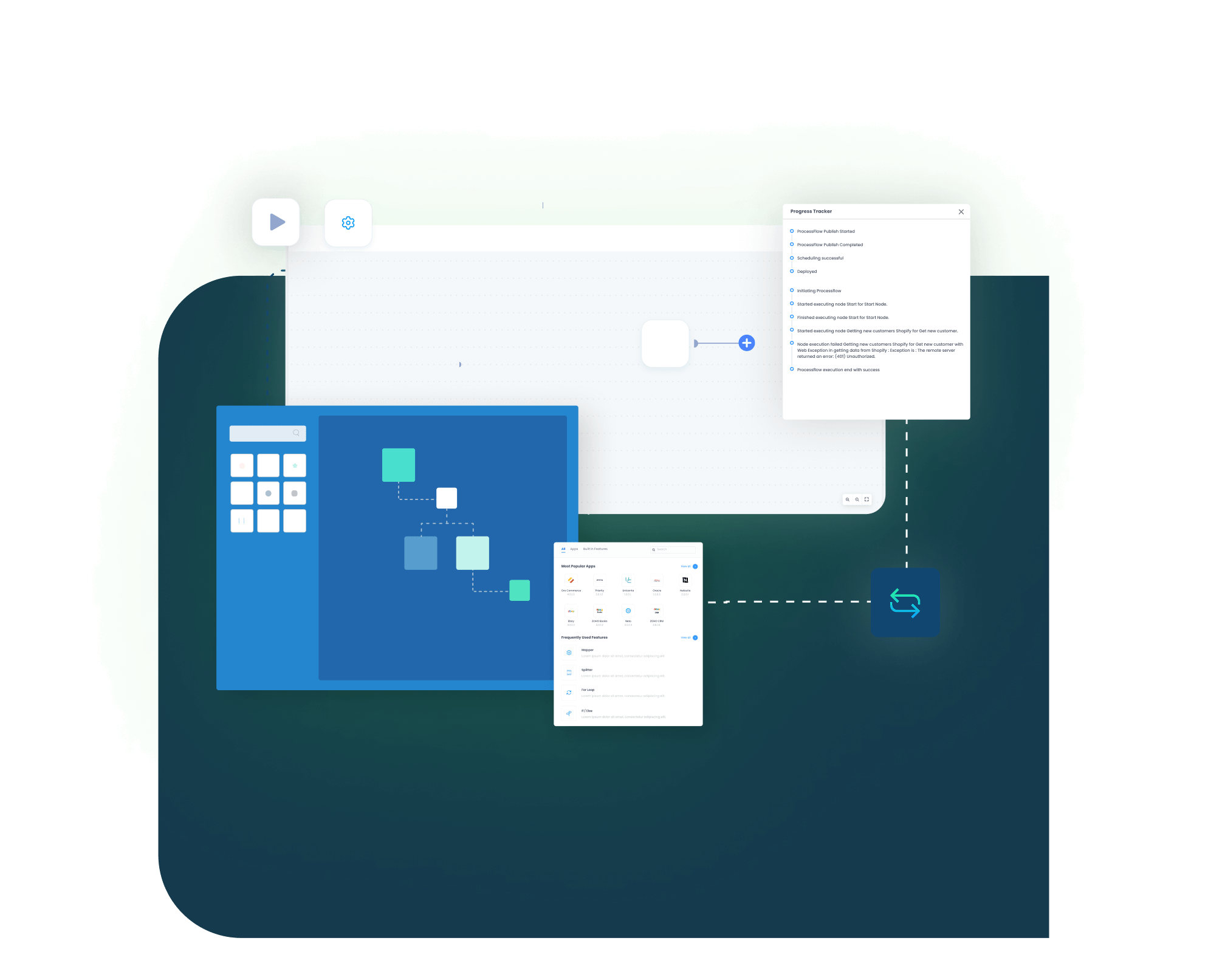
Logs, node status, and resync options help teams see what happened, correct the cause, and rerun affected records with more control.
Standard Features Covered in Our Sage 300 and Adobe Commerce (Magento) Integration Template
APPSeCONNECT supports Sage 300 and Adobe Commerce (Magento) integration across customer, product, inventory, and order workflows, with pricing, tax, and shipping handling included. The setup can follow your Sage 300 configuration and Adobe Commerce (Magento) store process, and can be planned around warehouse rules, customer codes, and field mappings.
Customer and Account
Adobe Commerce (Magento) Customers → Sage 300: New or updated store customers can create or update Sage 300 customer records with billing, shipping, and contact details mapped.
Sage 300 Customers → Adobe Commerce (Magento): Selected customer changes can move back to the store, helping teams keep account details matched across both systems.
Guest Checkout Mapping: Guest orders can map to a default customer code, keeping order handling simple when a full account record is not created.
Product and Pricing
Sage 300 Products → Adobe Commerce (Magento): Item details and product updates can move to the store, keeping catalog and item records more consistent for daily work.
Sage 300 Pricing → Adobe Commerce (Magento): Approved prices, including customer-specific pricing where the process requires it, can be mapped to the storefront so buyers see the right figures.
Tax and Shipping Mapping: Tax categories and shipping charges can be mapped so web sales carry the correct values into Sage 300.
Order and Fulfillment
Adobe Commerce (Magento) Orders → Sage 300 Sales Orders: Store orders can create Sage 300 sales orders with items, quantities, taxes, shipping, and customer references included.
Order Status and Fulfillment Updates: Fulfillment and status details can return to the store where the flow supports it, so buyers and staff work from current information.
Inventory and Warehouse
Sage 300 Stock → Adobe Commerce (Magento): Scheduled or event-driven inventory updates can align store stock with Sage 300, using a single warehouse or combined stock across several.
Warehouse Mapping Control: Teams can map which warehouse stock is published online, so the storefront shows the inventory the business wants to sell.
Invoice, Monitoring, and Retry
Sage 300 Invoice References: Invoice and billing references can stay connected to the Sage 300 record where visibility is required, supporting cleaner finance follow-up.
Monitoring and Retry: Teams can track success and error states, let auto-retry handle transient failures, and resync missed records after correcting the cause.
Popular Sage 300 and Adobe Commerce (Magento) Integrations
Sage 300 and Adobe Commerce (Magento) integration often becomes part of a wider commerce and operations stack. Businesses can connect CRM systems, marketplaces, POS, EDI, warehouse and 3PL, shipping, and payment tools around Sage 300 and the store, with Sage 300 remaining the ERP system of record.
Popular Sage 300 Integrations
Connect Sage 300 with other business applications.
Looking for a Specific Integration?
Visit All Sage 300 Integrations
Popular Magento Integrations
Looking for a Specific Integration?
Visit All Magento Integrations
INTEGRATION BROCHURE
Download the Sage 300 and Adobe Commerce (Magento) Integration Brochure
Inside you will find:
- Flow Diagrams: See how customers, products, stock, and orders move between Adobe Commerce (Magento) and Sage 300.
- Mapping Checklist: Check the critical fields before go-live, including customer codes, warehouses, tax, and shipping, so teams avoid missing values and cleanup work later.
- Rollout Approach: Start with customer, product, stock, and order flows, then extend into pricing rules, guest checkout handling, and invoice references.
- Admin Tips: Learn how to monitor runs, review failed records, and resync updates without stopping daily work.
Real-world use cases
Use Cases
The Sage 300 and Adobe Commerce (Magento) integration supports retailers, distributors, and B2B sellers that need store activity and ERP records to stay connected. The goal is to reduce manual work and keep Sage 300 aligned with online selling.
B2B & Wholesale Distribution
Scenario: Distributors sell online with ERP-backed pricing and stock
B2B and wholesale sellers using Adobe Commerce (Magento) need Sage 300 pricing, stock, and customer data to be reliable before orders are placed and processed.
- Store orders can create Sage 300 sales orders with mapped customer, item, tax, and shipping data.
- Customer-specific pricing can be reflected on the storefront where the process requires it.
- Stock from Sage 300 can align with the store so buyers see accurate availability.
- Guest and account orders can both route into Sage 300 with consistent handling.
Supports distributors, wholesalers, and B2B sales teams that use Sage 300 as the ERP backbone.
What this integration handles
Synced
Store orders into Sage 300
Mapped
Customer and pricing data
Updated
Inventory across store and Sage 300
Prepared
Guest and account order handling
Retail & Multichannel
Scenario: Retailers keep the storefront aligned with the ERP record
Retailers running Adobe Commerce (Magento) need catalog, stock, and order records to stay close to Sage 300 so operations spend less time correcting data.
- Product and catalog updates can move between Sage 300 and the store.
- Inventory changes can update the storefront where the flow requires them.
- Web orders can move into Sage 300 with taxes and shipping included.
- Warehouse mapping can control which stock is shown online.
Supports retailers and multichannel sellers that use Sage 300 as the system of record.
What this integration handles
Connected
Order-to-Sage 300 pipeline
Mapped
Product and catalog data
Controlled
Warehouse stock display
Updated
Inventory and stock movement
Finance & Operations
Scenario: Finance teams trace web sales back to the Sage 300 record
Finance and operations teams need invoice references, order values, and account details to stay connected to the original Sage 300 record instead of arriving as disconnected exports.
- Order values and references can stay connected to the Sage 300 record.
- Invoice and billing references can support cleaner finance follow-up.
- Logs and node status can support reconciliation and exception review.
- The resync function can recover records that failed to post.
Supports finance, accounting, and operations teams that need cleaner transaction traceability.
What this integration handles
Matched
Order and invoice references
Linked
Customer and account records
Auditable
Logs and node status
Recoverable
Resynced records
Workflow
How Does the Workflow Run End-to-End
Our Sage 300 and Adobe Commerce (Magento) integration runs through ProcessFlows. Each ProcessFlow defines the source system, target system, entity, connector action, field mapping, validation rules, run mode, retry settings, and monitoring path before any record moves.
Trigger and Source Connection
The flow can begin through a webhook, schedule, or configured sync. The source can be Adobe Commerce (Magento) or Sage 300 depending on the process.
Data Extraction and Schema Reading
The workflow reads the selected source entity and its schema, such as a customer, product, stock update, order, or invoice record.
Transformation and Field Mapping
Fields transform between the store and Sage 300, applying customer match, item, price, tax, shipping, and warehouse rules.
Validation and Business Rule Execution
The record is checked before it posts. The flow can validate customer matching, item codes, pricing, tax groups, warehouse mapping, and required fields.
Record Creation and Target Push
The connector creates or updates the Sage 300 sales order, customer, or item record, or updates the store, and captures the response with success state and failure reason.
Monitoring, Retry, and Audit Logging
Logs, node status, and retry controls help teams review issues and rerun records after correction.
Meet appse ai
How appse ai Helps Streamline Sage 300 and Adobe Commerce (Magento) Integration
After Sage 300 and Adobe Commerce (Magento) are connected, teams still manage failed records, mapping changes, changing order volumes, and repeated checks. appse ai adds AI-assisted support around workflow design, exception review, and process signals while keeping Sage 300 and store controls in place.
Workflow Design
Help teams describe a process and shape the workflow structure around it, especially when new entities or connected systems are added.
Issue Detection
Spot broken flows, error patterns, and records that need review before they become daily cleanup work.
Order Tracking
Review order movement from the first store record through later updates across connected systems.
Stock and Finance Clarity
Make inventory, invoice, and payment-related updates easier to review across connected systems.
API Coordination
Support workflows where Sage 300, the store, and other systems share data through managed APIs.
Teams Stay in Control
AI-assisted support helps the process while teams set the rules and decide how records move.
Sage 300 and Adobe Commerce (Magento) integration connects your online store with Sage 300 ERP through controlled data workflows. APPSeCONNECT can move orders, customers, products, pricing, inventory updates, and invoice references between Adobe Commerce (Magento) and Sage 300 while Sage 300 stays the system of record.
Businesses integrate the two systems to reduce manual entry and keep store and ERP records aligned. It helps limit duplicate customers, delayed order processing, stock mismatches, and finance follow-up work, so sales, warehouse, and finance teams work from the same record.
The integration can support customer and account records, products and catalog data, pricing, tax and shipping details, inventory updates, sales orders, and invoice references. The final scope depends on the Sage 300 setup and the Adobe Commerce (Magento) store process.
APPSeCONNECT connects the two systems through configured ProcessFlows. Each flow defines the source, target, entity, connector action, field mapping, validation rules, run mode, retry behavior, and monitoring path before any record moves.
Yes. Guest checkout orders can map to a default customer code in Sage 300, so orders are processed consistently even when a full account record is not created in the store.
Stock updates from Sage 300 can reach Adobe Commerce (Magento) on a schedule or when stock changes, using a single warehouse or combined stock across several. Warehouse mapping controls which stock is published online.
Customer-specific pricing can be reflected on the storefront where the process requires it, supporting B2B and wholesale selling. The exact pricing rules depend on your Sage 300 configuration and store setup.
The integration is intended for Magento 2 and Adobe Commerce. Confirm your specific version, edition, and hosting model with the APPSeCONNECT team during setup so credentials and mapping can be planned correctly.
When a sync fails, APPSeCONNECT provides logs, node status, and transaction details for review. Auto-retry handles transient failures, and teams can correct missing fields or mapping issues and resync the affected records.
Start by identifying the records that create the most manual work, such as order sync, customer sync, product and price sync, and inventory updates. APPSeCONNECT can then help map, configure, test, monitor, and scale the integration.
Ready to Launch Your Sage 300 and Adobe Commerce (Magento) Integration Today?
Companies automating their business through APPSeCONNECT
Customer Success Stories
Related Resources
Articles and Guides to Help You With Your Integration and Automation Journey